When Air Holds Stone
2026
Air Collection
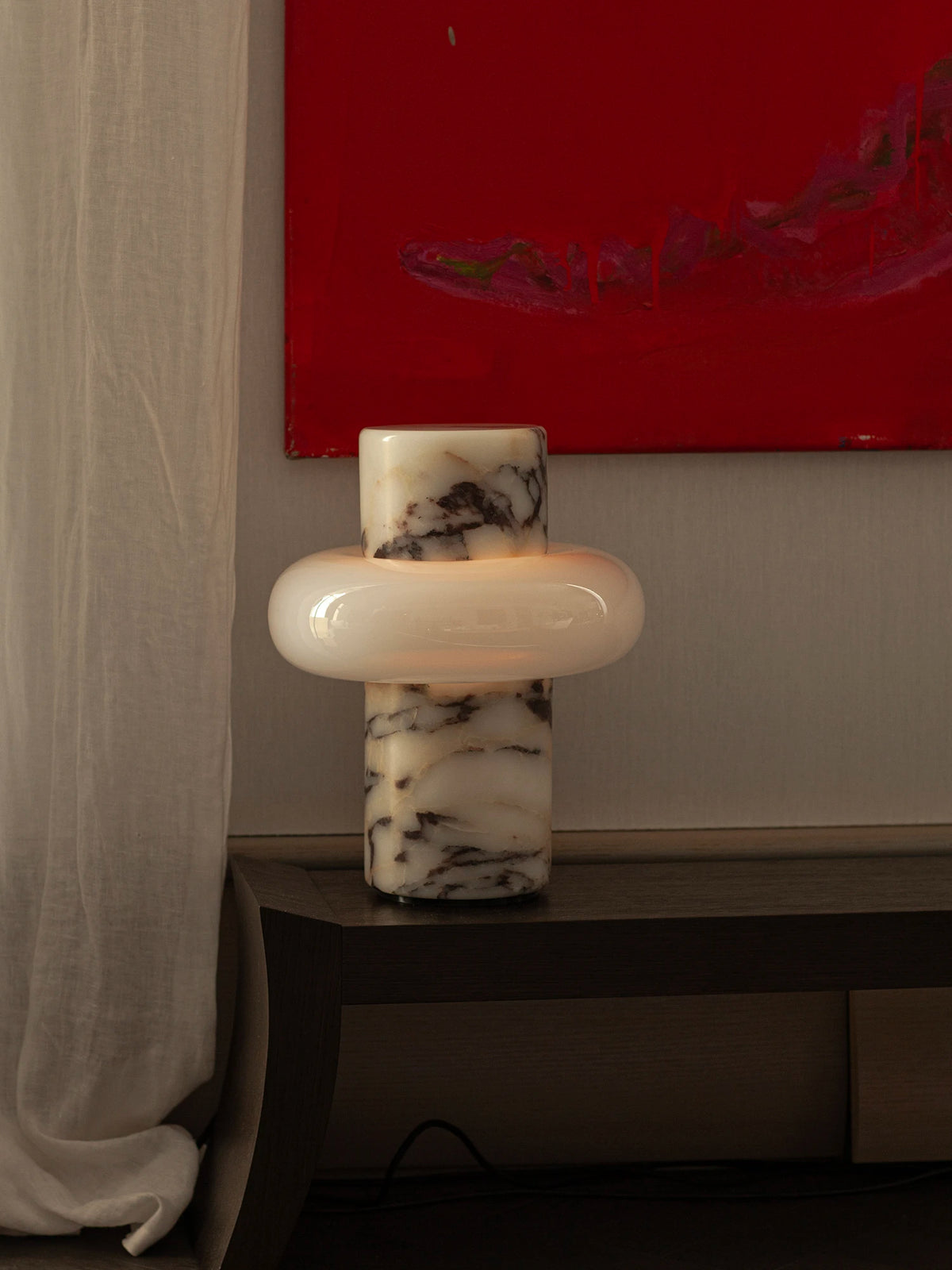
AIR begins with an unexpected relationship between two contrasting materials. Glass, shaped by breath and fire, becomes strong enough to carry the weight of solid marble. What appears delicate is, in fact, structural. Through this reversal of material expectations, AIR explores the balance between physical weight and visual lightness.
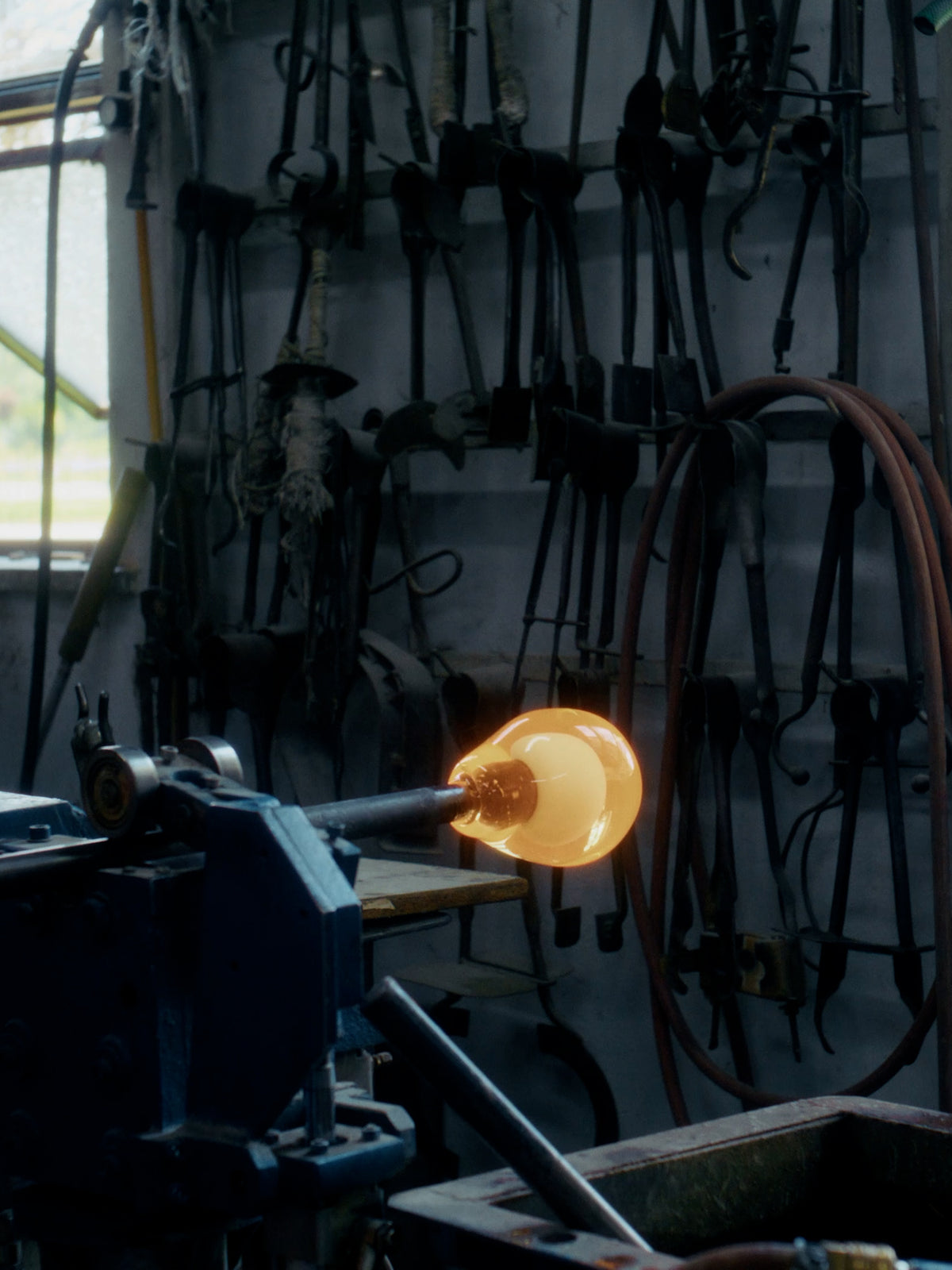
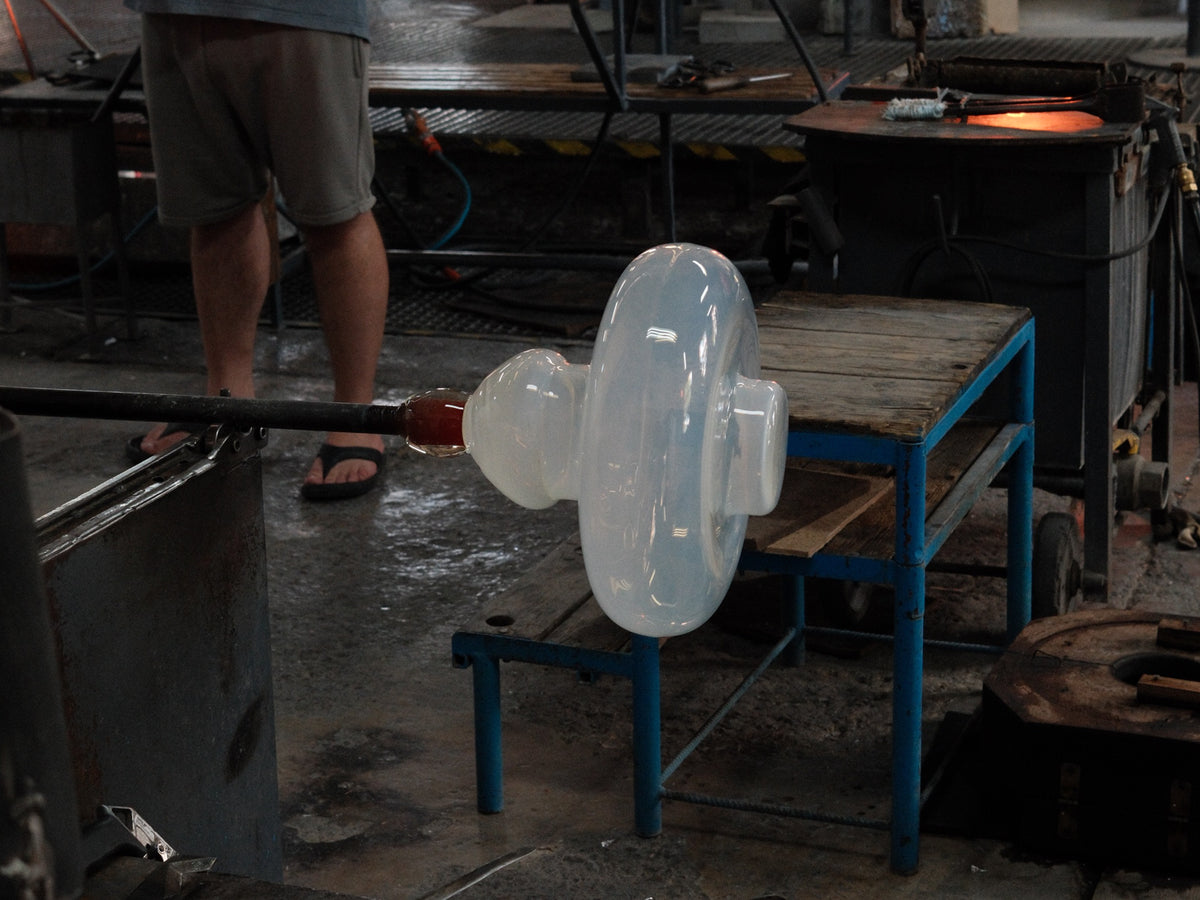
Molten glass is carefully rotated and shaped while still responsive to heat and movement.
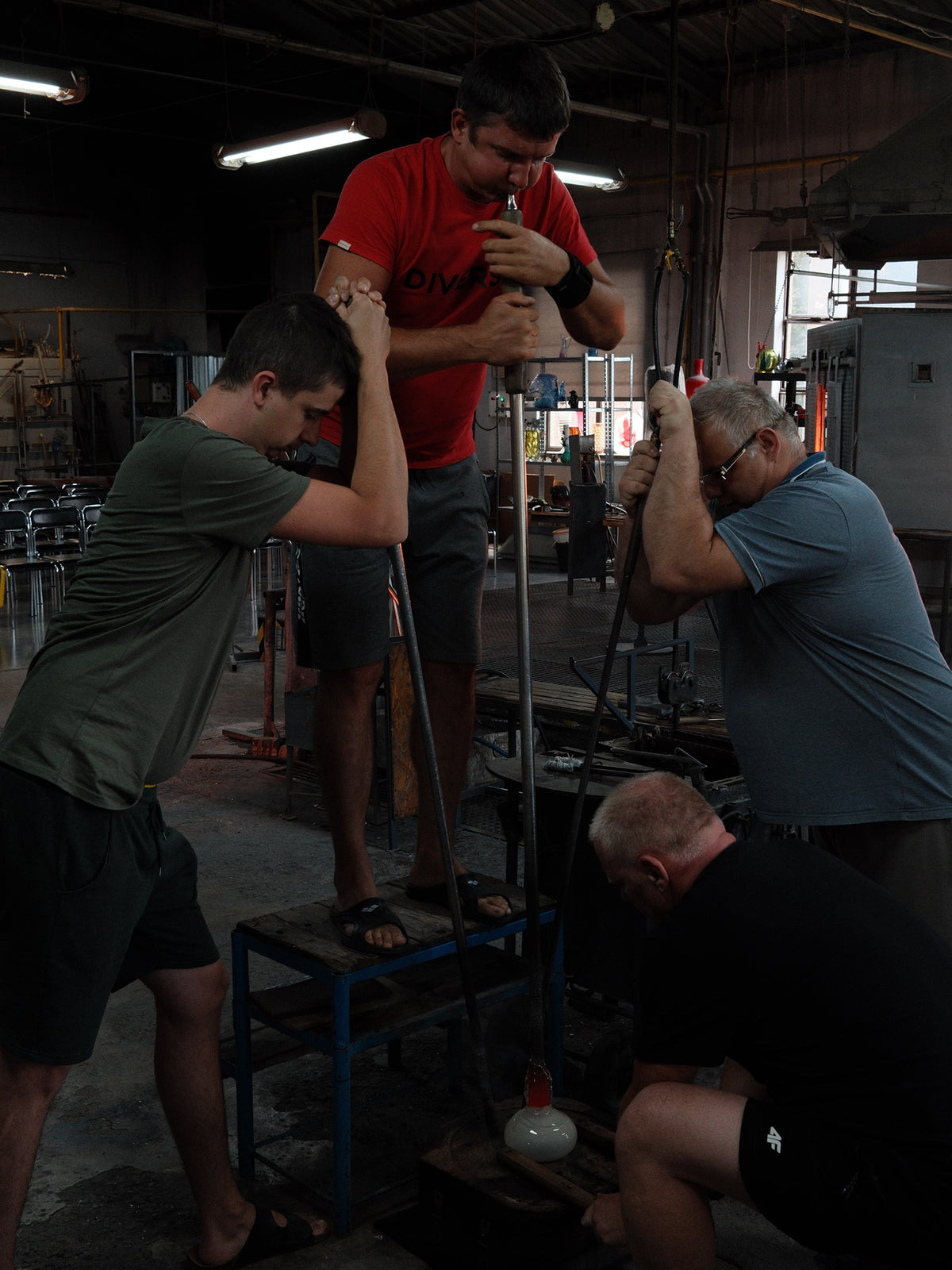
Skilled glassmakers work together, using controlled breath to expand and shape the molten glass.
From Breath to Structure
At the heart of AIR is the traditional art of glassblowing. Molten glass is gathered from the furnace, expanded through the controlled breath of the glassmaker and gradually shaped within a wooden mould. Every movement responds to the temperature and behaviour of the material, transforming a fluid substance into a carefully formed object of remarkable strength.
The Making of a Form
The glassblowing process extends beyond the initial act of shaping. Once formed, each glass element undergoes gradual cooling before its edges are carefully cut, ground and finished. These stages refine the form and prepare it for assembly, balancing the precision required by the design with the individual character of handcrafted glass.
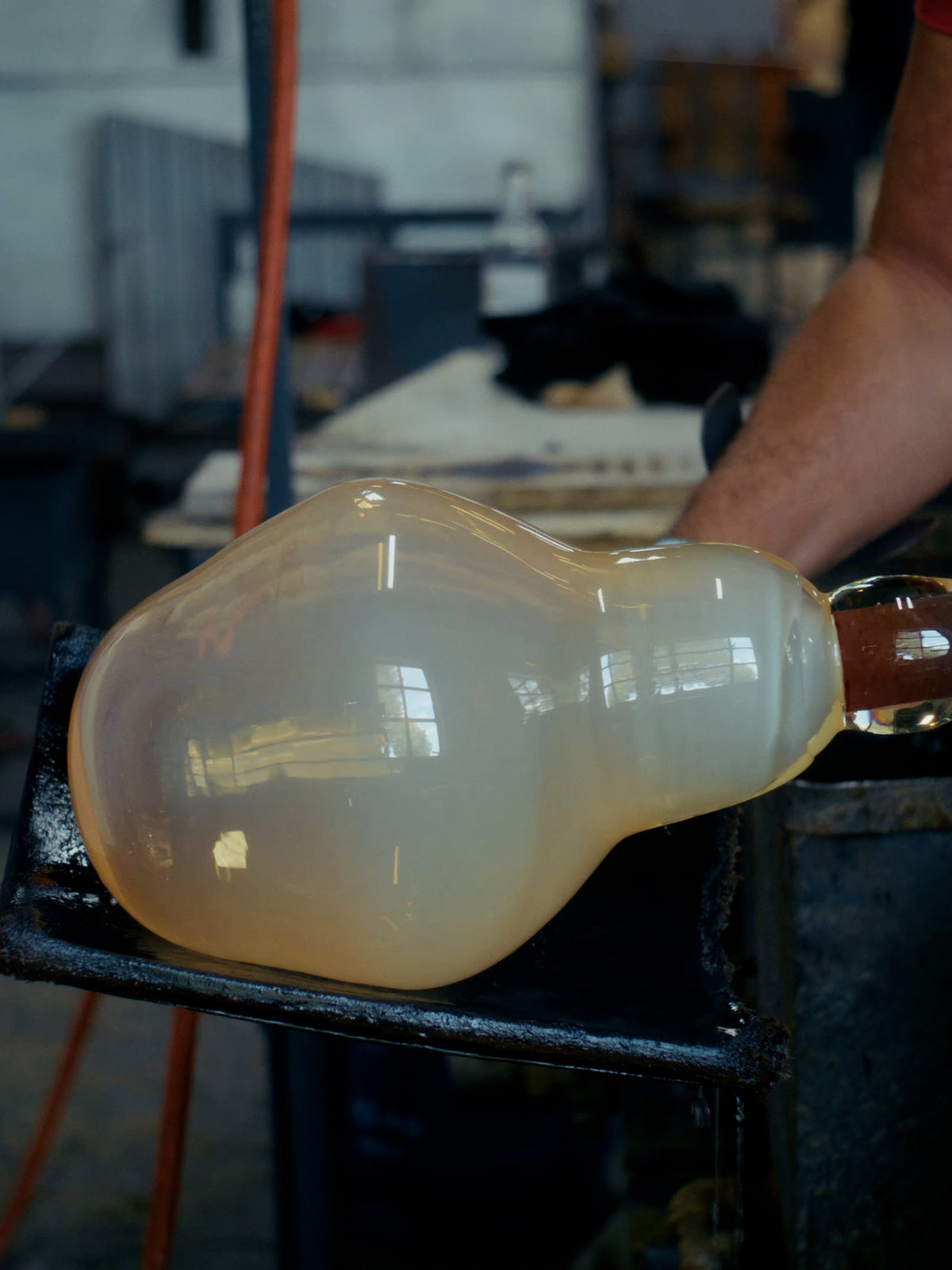
The softened glass is gradually shaped into the distinctive rounded geometry of Torus.
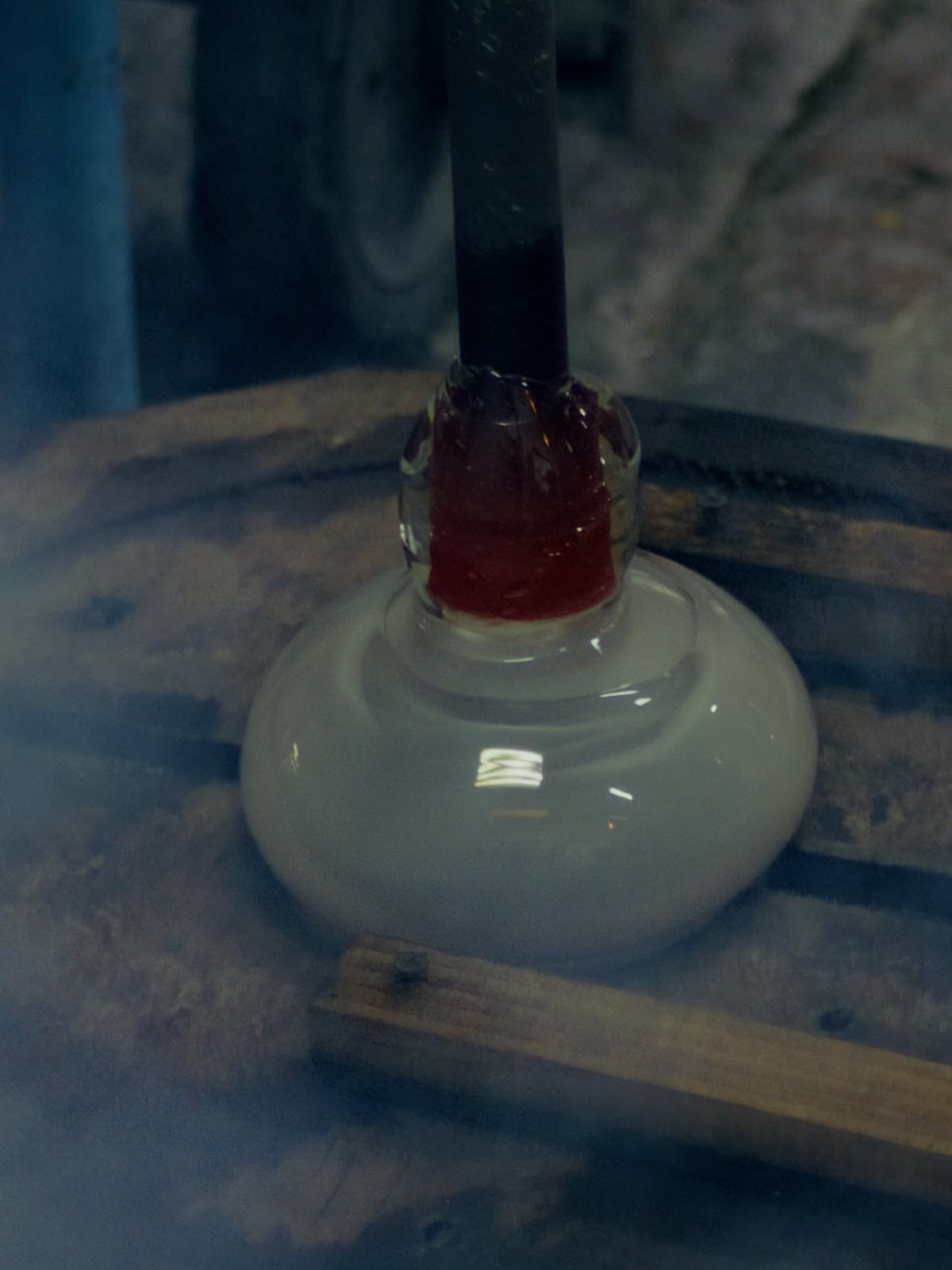
The glass takes on its sculptural silhouette through careful manipulation while still hot.
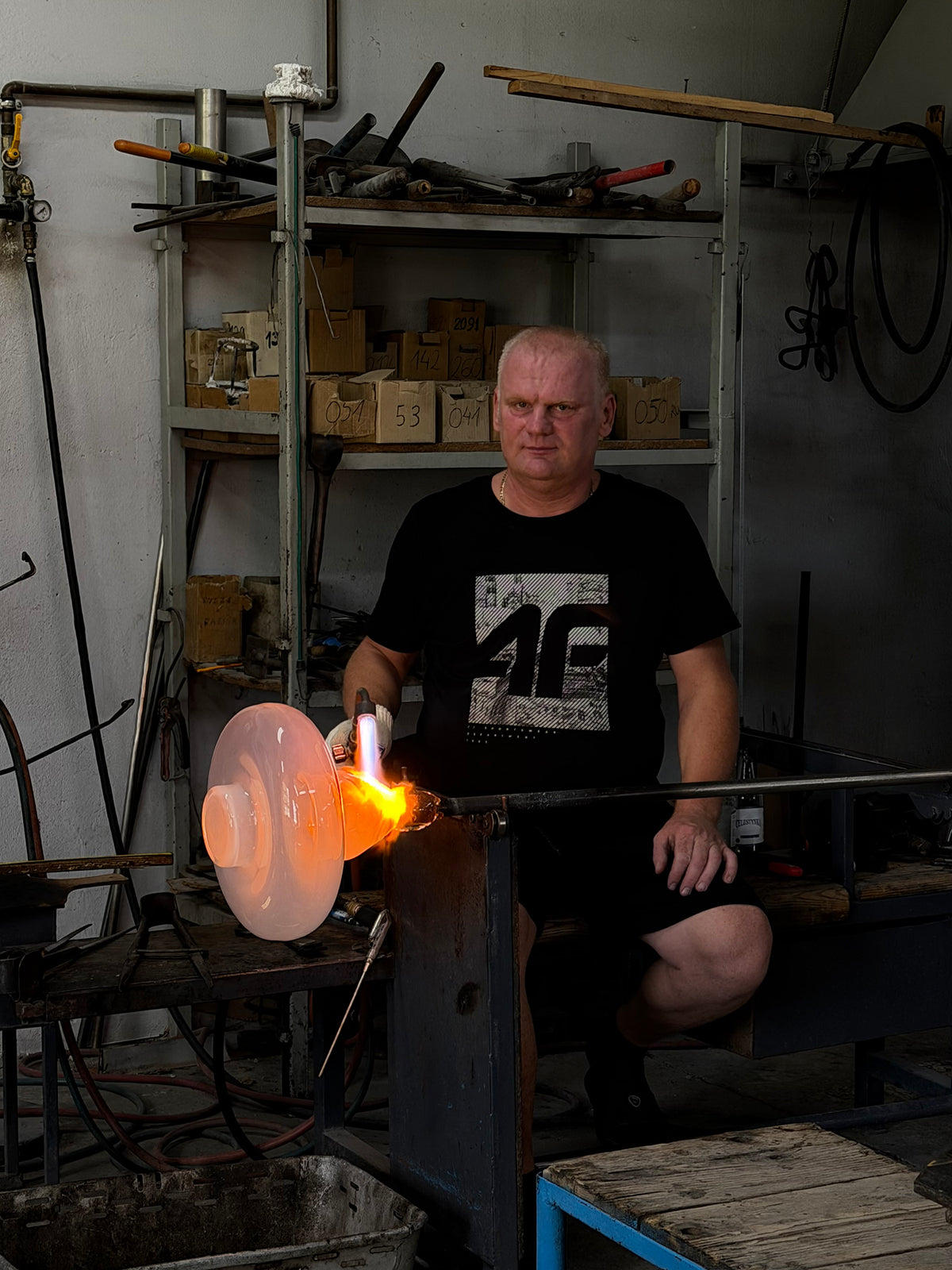
A concentrated flame reheats the glass, allowing the artisan to refine its form.
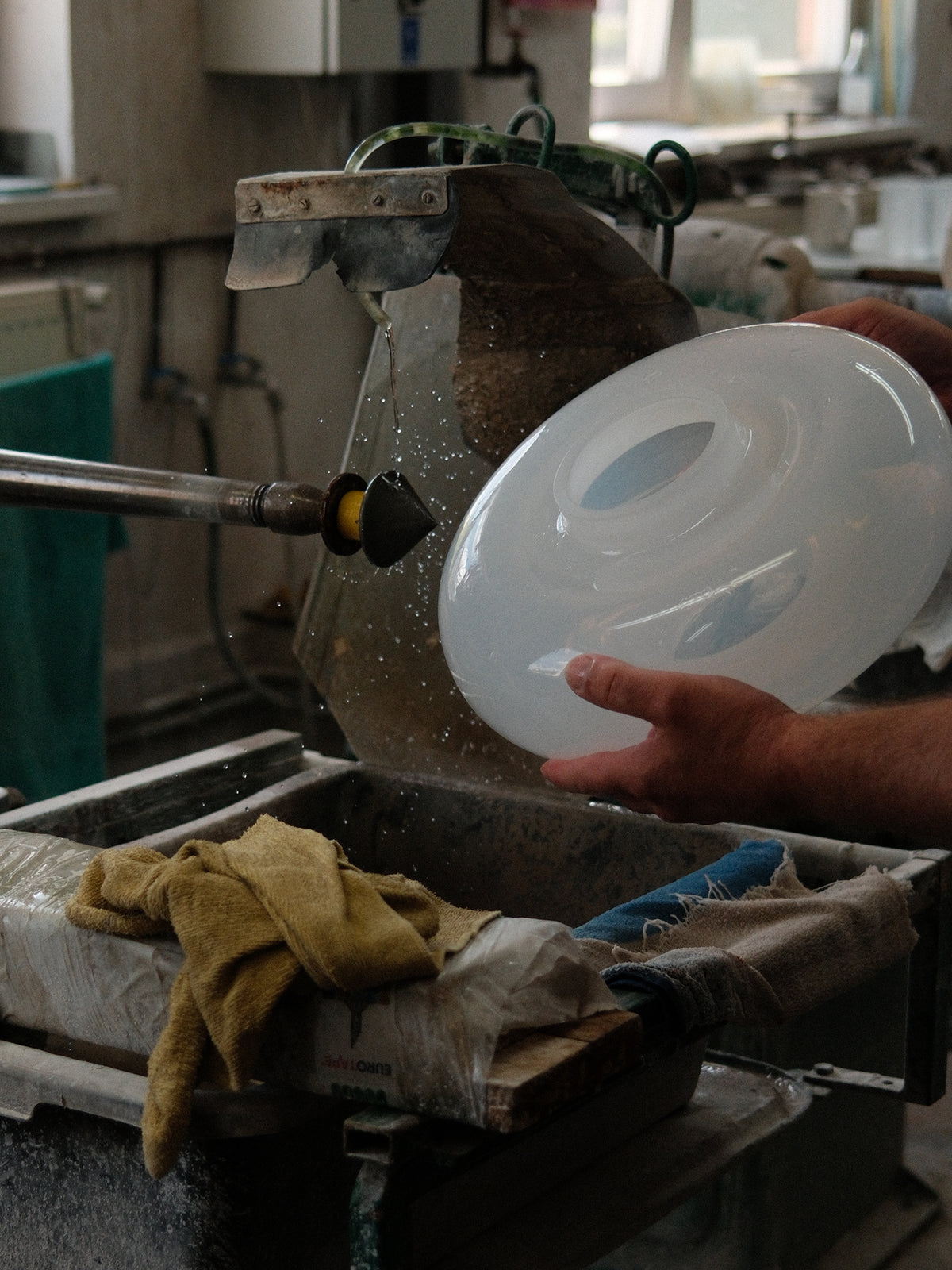
The edges of the blown glass are carefully ground and refined to achieve a precise finish.
The Traces of the Human Hand
Hand-blown glass carries subtle traces of its making. Small air bubbles, gentle surface undulations and slight variations in form may remain visible in the finished piece. Rather than seeking absolute uniformity, AIR celebrates these characteristics as expressions of traditional craftsmanship, preserving the unique identity of each glass element.
When Glass Becomes Structure
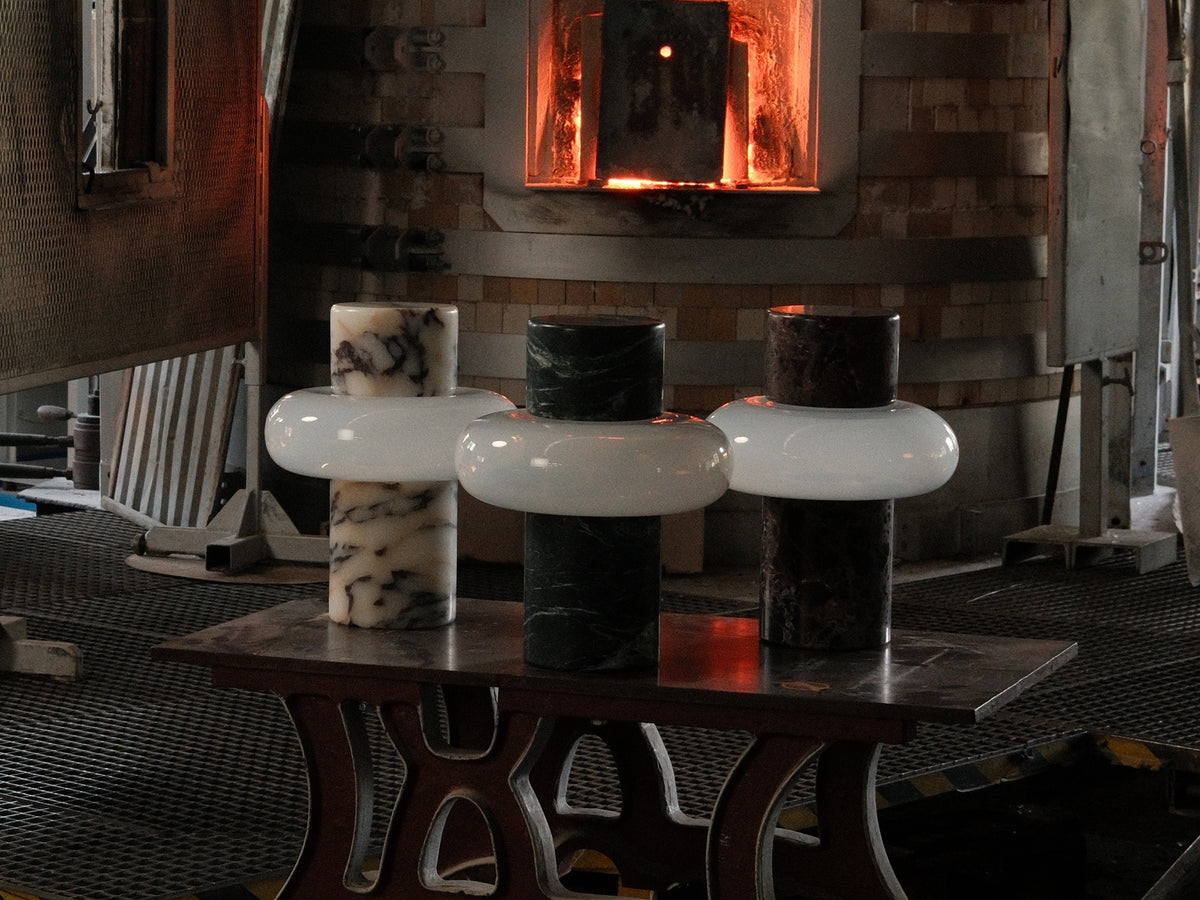
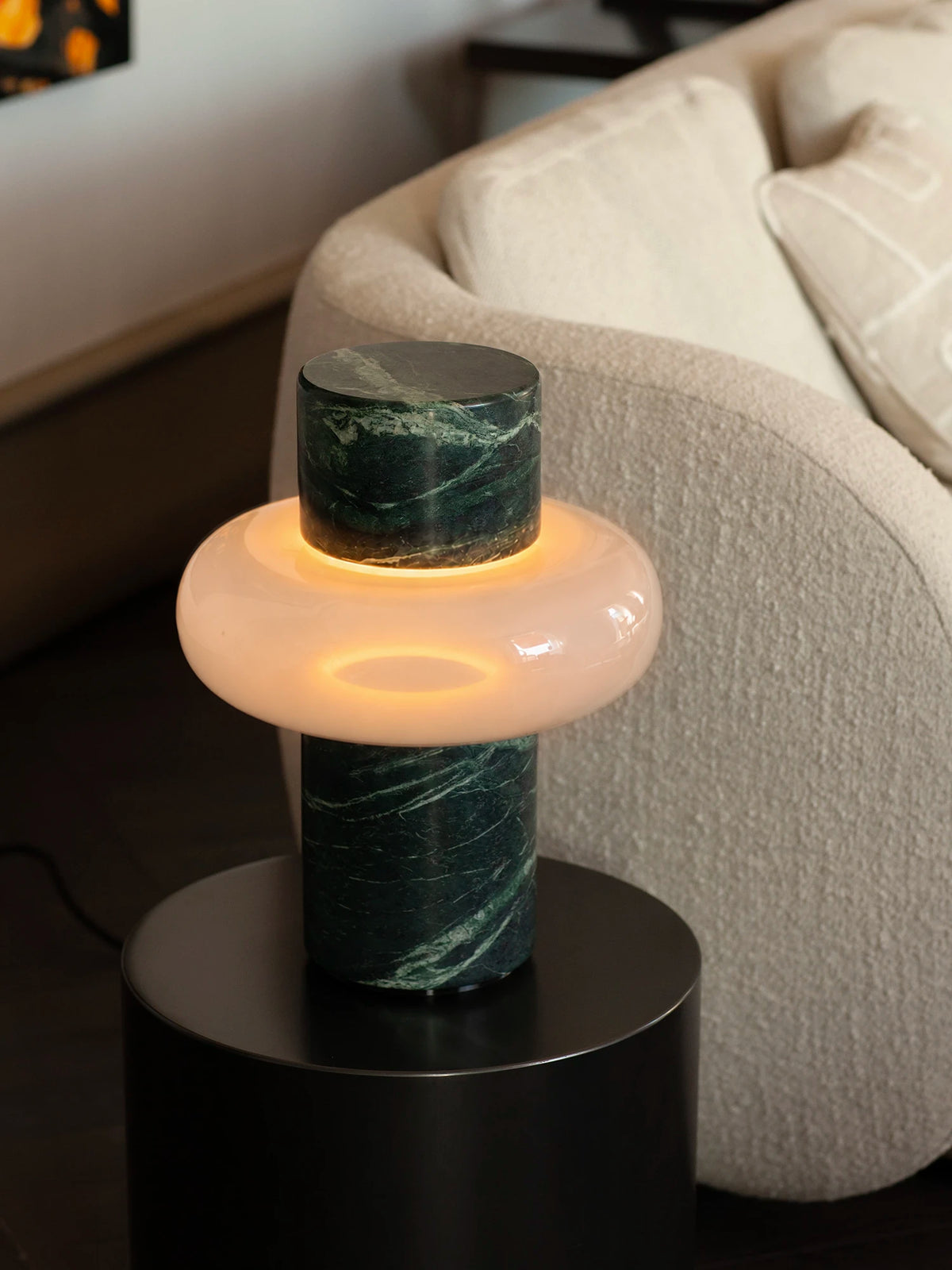
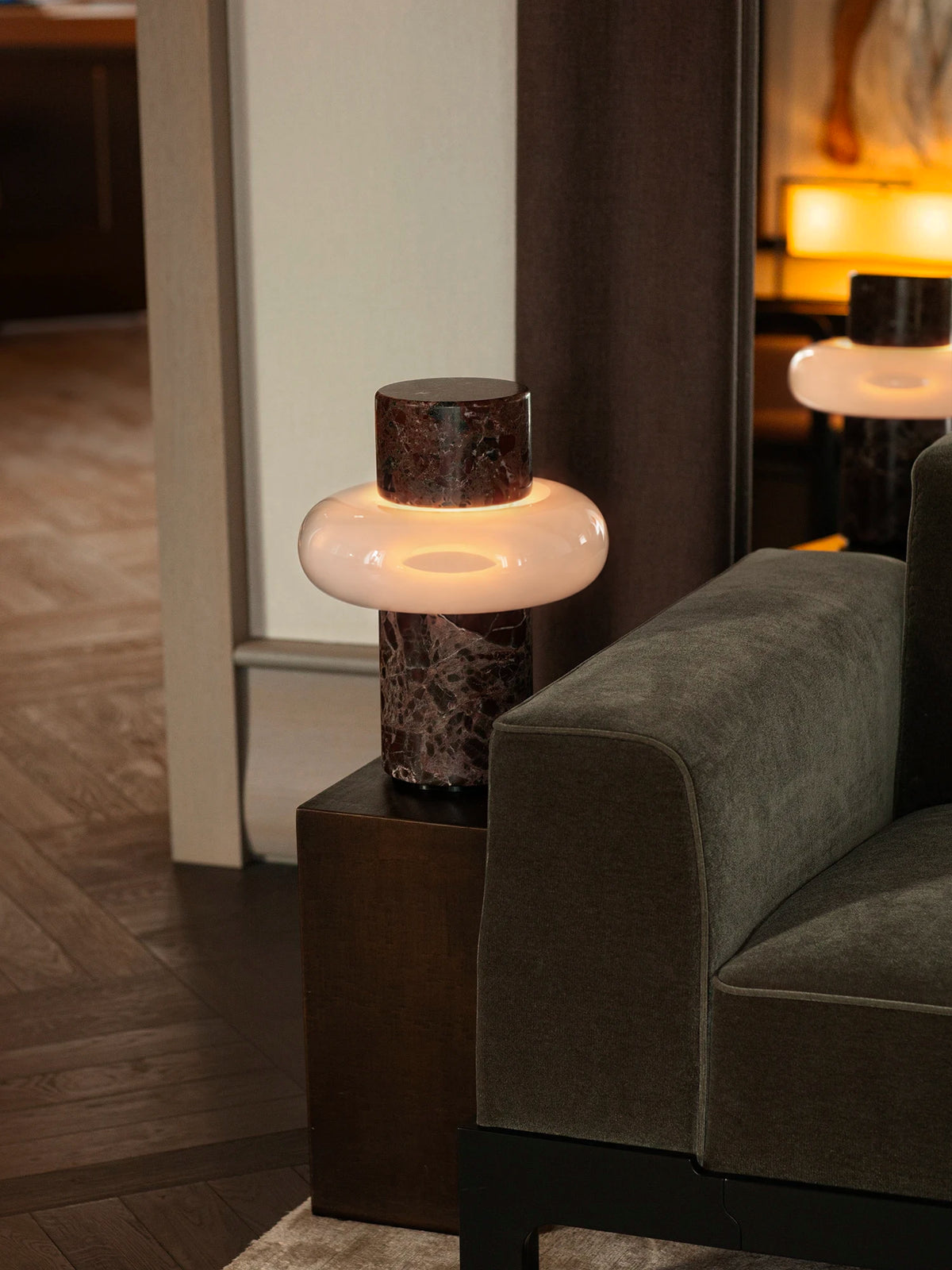
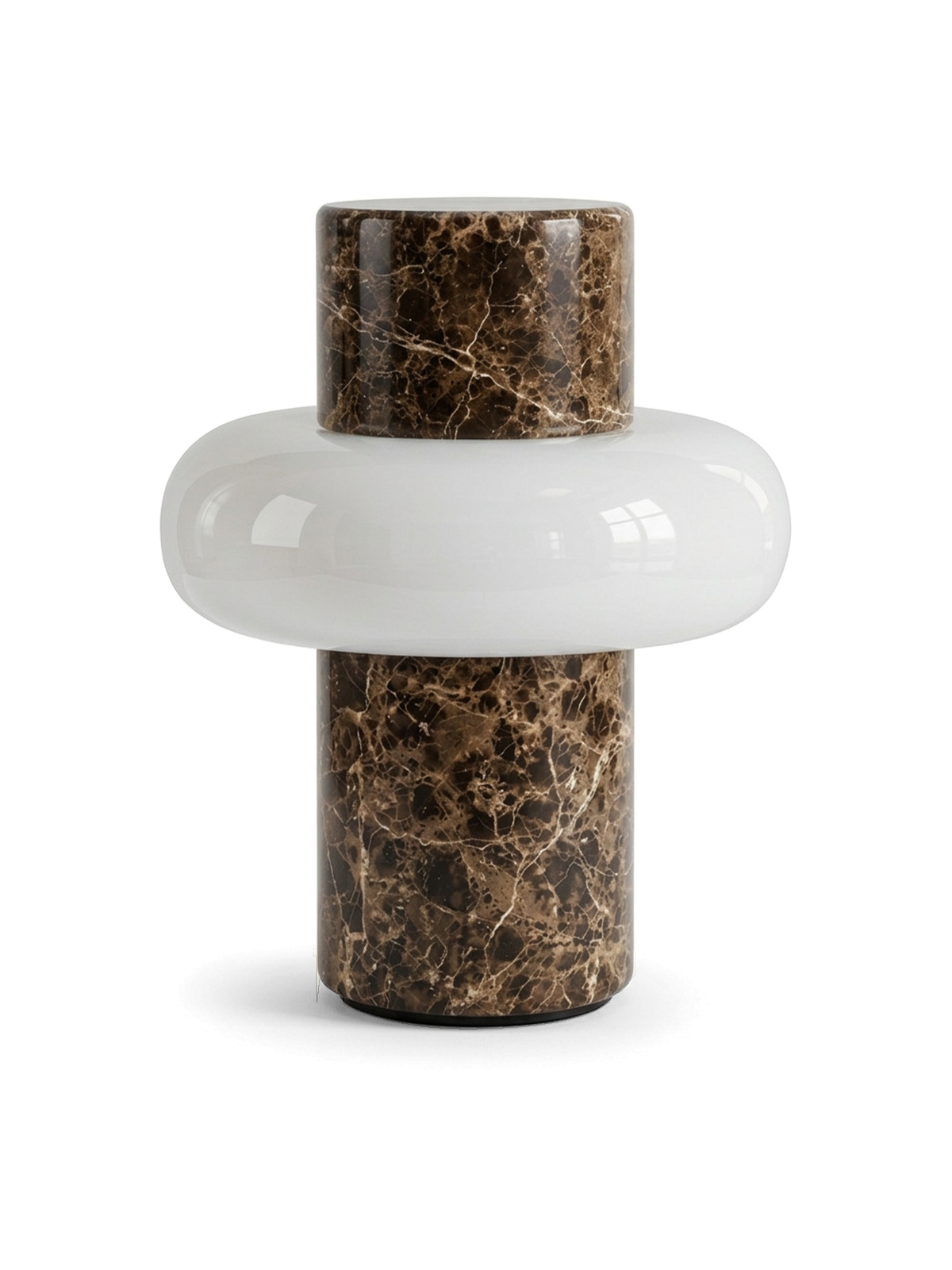
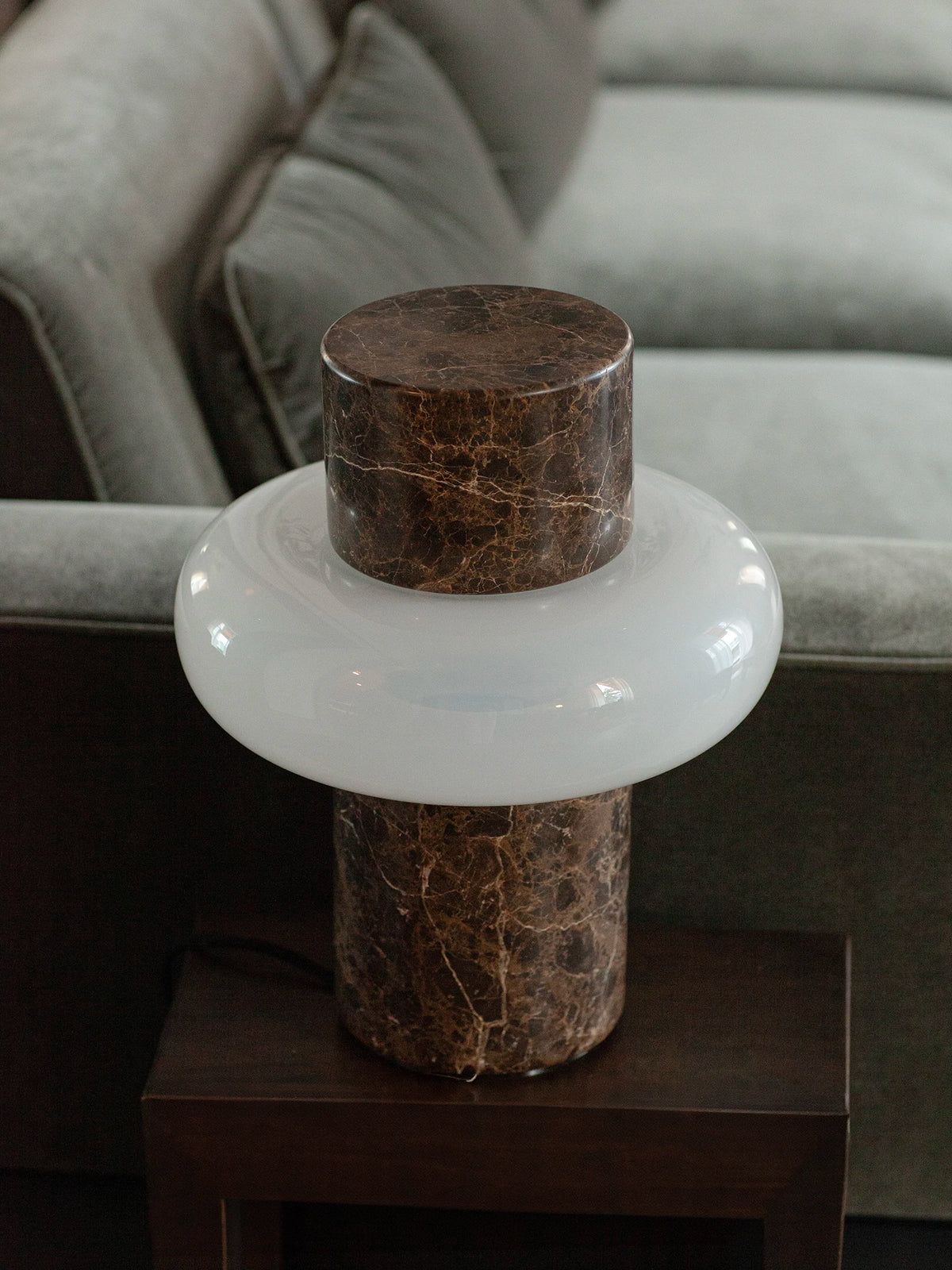
In Torus, glass is more than a decorative element or a diffuser of light. It becomes an integral part of the structure, physically supporting the weight of solid marble. The contrast challenges our instinctive understanding of material strength: the seemingly delicate glass carries the dense stone above it. What appears weightless becomes essential to the stability and expression of the object.
Torus — Air Made Visible
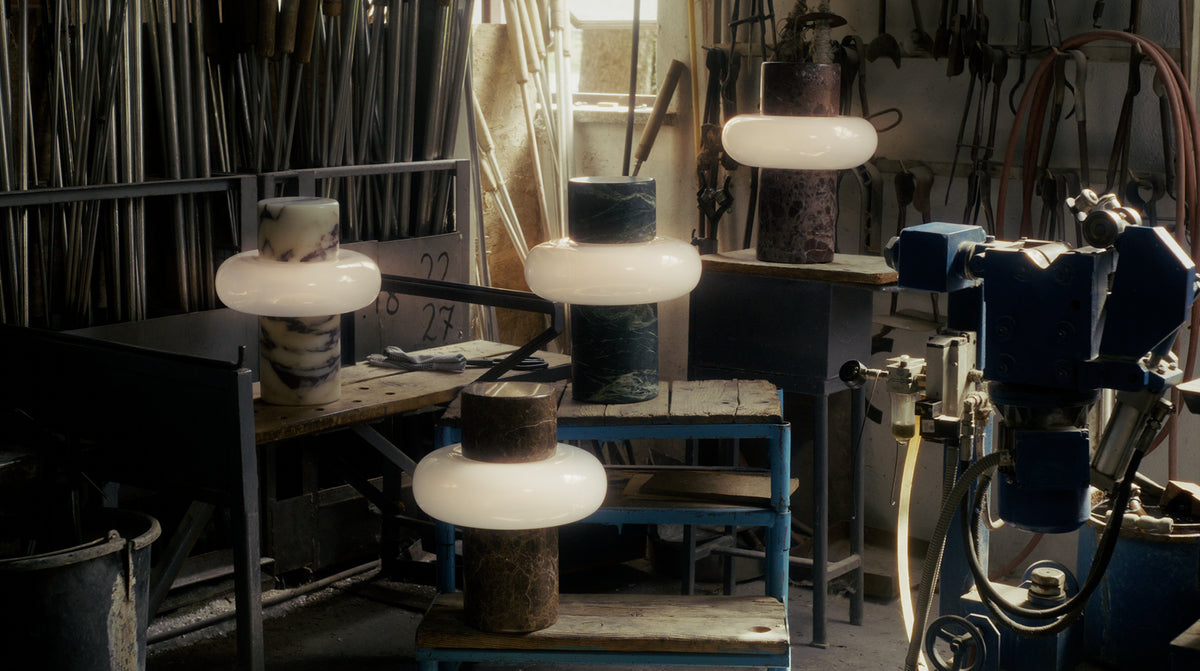
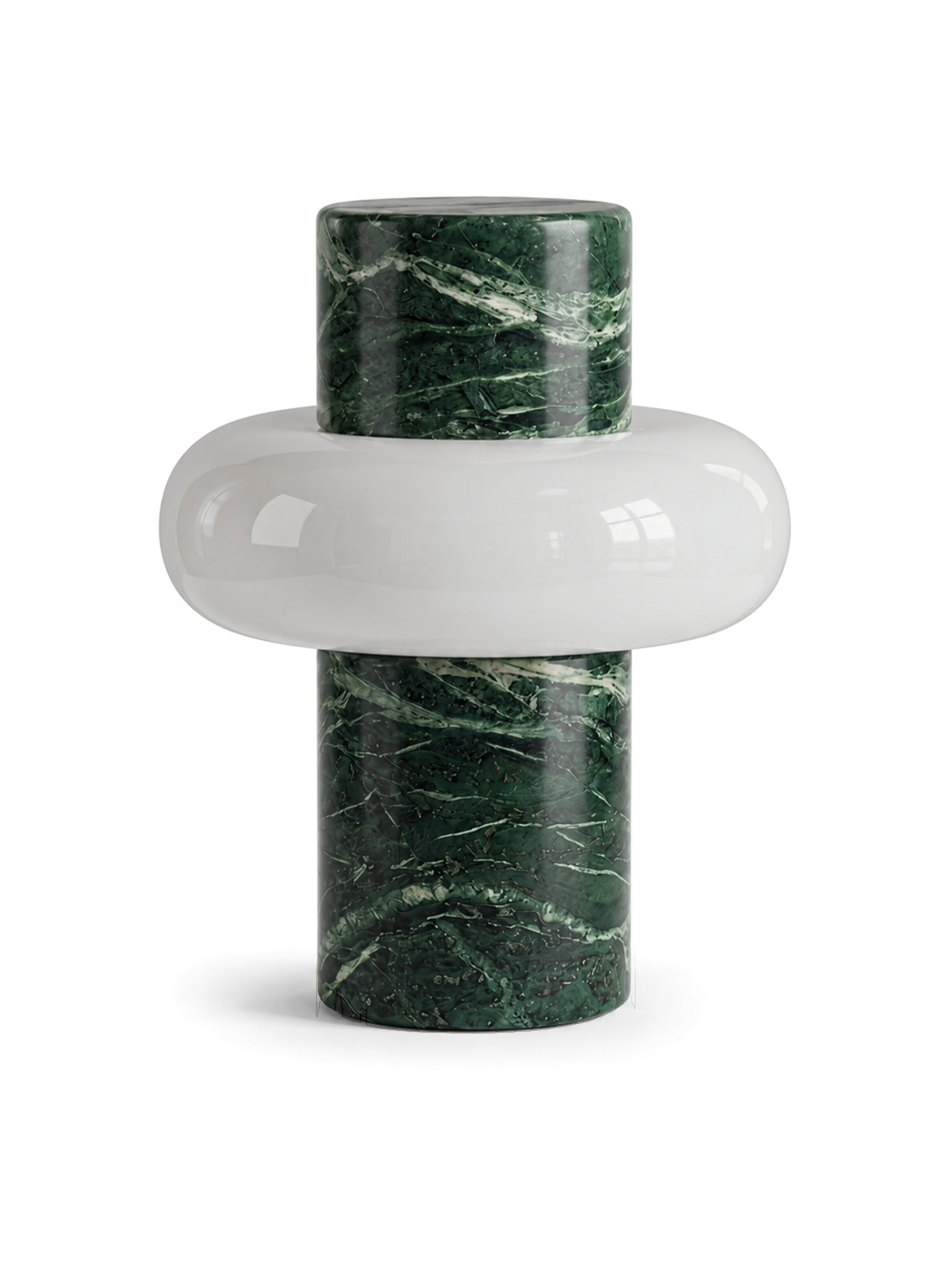
Torus brings together two contrasting material worlds: the substantial weight of natural Italian marble and the delicate transparency of hand-blown glass. Shaped into a simple cylindrical form, each stone reveals its individual character through distinctive veining, colour and natural variation. Together, these materials create a sculptural composition where glass carries stone, and light transforms the perception of weight.
New
New

New
New